




Battlezoo Bestiary: Elemental Storm Review | More Than Just Another Monster Book
I love making monsters.
As a Game Master, I’ve spent a lot of time creating my own creatures, tweaking existing stat blocks, coming up with strange abilities, and generally asking the question, “What if this monster could do THIS?”
So when I get handed a new bestiary, I’m probably not the easiest person to impress.
Don’t get me wrong. More monsters are always a good thing.
I’ll happily flip through hundreds of new creatures looking for that one weird monster that makes me immediately start imagining an encounter around it. But a bestiary has to offer me something beyond a pile of stat blocks if it’s going to earn a permanent place on my gaming shelf.
That’s why Battlezoo Bestiary: Elemental Storm surprised me. This book pairs nicely with the BattleZoo Eldamon for some nice extra beasties.
Yes, it has monsters.
A LOT of monsters.
But that’s almost the least interesting thing about this book.
Roll for Combat sent Nerdarchy this book as part of a batch of Battlezoo material for us to check out, and Elemental Storm quickly became the kind of RPG book that I kept finding reasons to flip back through.
Because there’s a lot more here than another collection of things for the party to hit with swords.
160+ Monsters Powered by 20 Elements
Let’s start with the obvious.
Elemental Storm is packed with monsters.
The book contains more than 160 elemental creatures, drawing from 20 different elements. That includes the classics you’d expect, such as air, earth, fire, and water, but also more unusual concepts such as music, space, and time.
And that variety is one of the things that makes the book stand out.
When you hear “elemental monster,” your brain probably immediately goes to the four traditional elements.
Fire monster.
Water monster.
Earth monster.
Air monster.
Battlezoo looks at that concept and basically says, “Sure. But what if we get weird with it?”
And that is exactly where my interest starts.
The more unusual elemental concepts open up some really fun possibilities for encounters. Suddenly you’re not limited to creatures representing physical substances. You can start thinking about monsters built around concepts and forces that don’t necessarily have a physical form.
That gives a DM a lot more creative territory to explore.
But Here’s What Really Got My Attention
The monsters are cool.
The art is cool.
The new spells are cool.
But the part of this book that made me stop and think, “I need to use this,” is the section on combat.
Specifically, the 10 Rules for Fun Combat.
This is the sort of material that I think experienced Game Masters should pay attention to just as much as someone running their first campaign.
Actually, maybe even more so.
Because after you’ve been running games for years, it’s incredibly easy to develop habits.
You know how to build encounters.
You know how to balance encounters.
You know how to run initiative.
You know how to run monsters.
You know how to keep combat moving.
And because those things become familiar, it’s surprisingly easy for something to slip through the cracks.
That’s why I love having someone else come along and say:
“Hey, here’s another way to think about running a fight.”
Ten Rules Every GM Should Look At

I won’t spoil the entire section here, because I genuinely think GMs should go read it themselves.
But the larger philosophy behind these rules is something I really appreciate.
Combat should be fun.
That sounds obvious.
But sometimes we get so focused on mechanics, encounter balance, action economy, hit points, conditions, and all the other moving pieces that we forget the most important part.
The players should be doing something interesting.
The battlefield should matter.
The monsters should feel like more than sacks of hit points.
The encounter should create memorable moments.
And even experienced GMs can probably find at least one thing in these ten rules that makes them reconsider how they run combat.
I know I did.
And I’m not saying that because I think I’m some kind of combat master.
Quite the opposite.
After running RPGs for as long as I have, I’m always looking for ways to make my encounters better.
These are the kinds of rules I can see myself coming back to again and again.
I will 1000% be reading this section multiple times.
More importantly, I expect several of these ideas to make their way into my regular rotation when I’m planning encounters.
Monster Hunting Changes the Entire Fight
Then we get to another major addition: the Monster Hunter rules.
This is where Elemental Storm starts feeling less like a traditional bestiary and more like a toolkit for changing the way RPG combat works.
The Monster Hunter rules let characters interact with large monsters in ways that go beyond simply standing in front of them and trading attacks.
Characters can climb onto large creatures, target specific body parts to weaken them, and even grab smaller monsters and use their attacks as weapons.
Think about what that does to an encounter.
Normally, a huge monster is essentially a collection of hit points.
You hit it.
It hits you.
You hit it again.
Eventually somebody reaches zero.
That’s functional.
But it isn’t always memorable.
Now imagine the players fighting a gigantic elemental beast.
Instead of simply attacking its Armor Class until it runs out of hit points, the fighter climbs onto its back.
The rogue is trying to reach a vulnerable point.
The wizard is trying to figure out which part of the creature is actually powering its abilities.
The monster is thrashing around trying to throw everyone off.
Suddenly the encounter is moving.
The players are making decisions.
They’re interacting with the monster rather than simply attacking it.
That’s the kind of combat I want to run.
Turning a Monster Into a Battlefield
This may be my favorite idea in the entire book.
A sufficiently large monster shouldn’t just occupy a few squares on a battle map.
The monster should BE the battlefield.
The players can climb it.
They can attack different parts of it.
They can use its movements against it.
They can exploit weaknesses.
They can scramble across its body while it tears through the surrounding environment.
That creates the sort of cinematic encounters that tabletop RPGs are uniquely good at producing.
And it also gives the players opportunities to come up with ridiculous plans.
Which, let’s be honest, is one of the best parts of being a GM.
Player: “I want to climb onto the monster.”
GM: “Okay.”
Player: “Then I want to cut the magic crystal out of its back.”
GM: “Okay…”
Player: “Then I want to use it to power my sword.”
GM: “We’re doing this, apparently.”
Those are the moments people remember.
New Elemental Spells

Elemental Storm also provides dozens of new elemental spells.
And I appreciate that these aren’t simply endless variations on Fireball.
Because let’s be honest.
We’ve seen Fireball.
We’ve seen Lightning Bolt.
We’ve seen them approximately a million times.
The book intentionally pushes into more unusual elemental effects, giving spellcasters additional ways to interact with the expanded elemental themes.
This gives players another reason to explore the elemental side of the game.
And it also gives GMs new tools for NPCs and monsters.
A spell doesn’t have to be a player option to be useful.
Give it to the villain.
Put it on an enemy spellcaster.
Build an encounter around it.
Create an artifact that lets somebody use it.
There are plenty of ways to make new spells matter.
Then Things Get Weird: Monster Parts
And now we arrive at another feature that I find incredibly compelling.
Monster Parts.
The idea is simple.
You kill a monster.
You harvest useful pieces.
You use those pieces to make things.
Weapons.
Armor.
Magic items.
Other equipment.
Then you can infuse those items with magical properties connected to the creature or its elemental nature.
Some people are probably going to look at this and think:
“That’s kind of macabre.”
And you know what?
They’re not wrong.
You’re literally taking pieces of dead monsters and turning them into equipment.
But I don’t find that off-putting.
I find it compelling.
Finally, Monsters Can Be More Than XP
This is something I’ve wanted more RPGs to explore for a long time.
What happens after you defeat the monster?
Traditionally, you get experience.
Maybe you get treasure.
Maybe you find something in its lair.
Then you move on.
But what if the monster itself is part of the reward?
What if its hide can become armor?
What if its bones can become weapons?
What if its magical organs can be used to create something?
What if defeating a creature actually gives the players a reason to care about what happens to the remains?
Now the monster has another layer of value.
And that can influence how players approach encounters.
Instead of:
“Kill the monster.”
You can have:
“Kill the monster without destroying the part we need.”
That’s a very different fight.
Monster Hunting Becomes an Adventure
The Monster Parts system can also create entire adventures.
Imagine the party needs an incredibly rare material for a magical item.
Where does it come from?
A monster.
Where does that monster live?
Somewhere extremely dangerous.
How do you get the material?
You have to kill it.
But maybe you need the material intact.
Now the crafting system has created the adventure.
That’s a beautiful thing for a Game Master.
You don’t necessarily have to invent another reason for the players to go fight the monster.
The players already want what the monster has.
And It Works With Your Homebrew Monsters
Here’s another feature that I particularly appreciate as someone who creates a lot of monsters.
The Monster Parts system isn’t limited to creatures found inside Elemental Storm.
Battlezoo specifically designed the system so that monster parts can be used from any monster, including homebrew creatures.
That matters.
Because if you’re like me, you’ve got folders full of monsters you’ve created.
You don’t want a system that says, “This only works if you’re fighting one of our monsters.”
Instead, you can take the monsters you’ve already built and incorporate them into the system.
That means the book doesn’t replace your creativity.
It gives your creativity another place to go.
Crafting Gets Interesting

The Monster Parts system also expands into different types of magical infusions.
The Elemental Storm version adds options associated with concepts such as metal, body, air, and wood, allowing those monster-derived properties to produce different effects when incorporated into gear.
This is the kind of thing that can turn loot into something players actually remember.
A +1 sword is useful.
A sword forged from the heart of an elemental titan that crackles with the creature’s residual power?
That’s a story.
And when the player asks where the weapon came from, the answer isn’t simply, “You bought it.”
It’s:
“Remember that thing you fought three sessions ago?”
Now the loot has history.
This Is Where Elemental Storm Really Shines
If this were simply a book with 160+ monsters, I’d already consider it useful.
If it were a book with monsters and spells, even better.
But when you add Monster Hunter rules and an expanded Monster Parts system, the book starts influencing how you approach the entire game.
That’s a much bigger deal.
It’s not just giving you things to put into your campaign.
It’s giving you new ways to run your campaign.
Great for GMs Who Build Their Own Monsters
I want to emphasize this because I’m probably the exact kind of GM who might initially look at this book and say:
“I make my own monsters. Do I really need another bestiary?”
After spending time with Elemental Storm, my answer is:
Yes.
Not necessarily because I need 160 more monsters.
I want the ideas.
I want the combat rules.
I want the Monster Hunter mechanics.
I want the crafting system.
I want the spells.
And I want the inspiration.
A good RPG supplement doesn’t have to replace what you already do.
Sometimes the best supplements give you new tools to do what you’re already doing better.
That’s what Elemental Storm feels like to me.
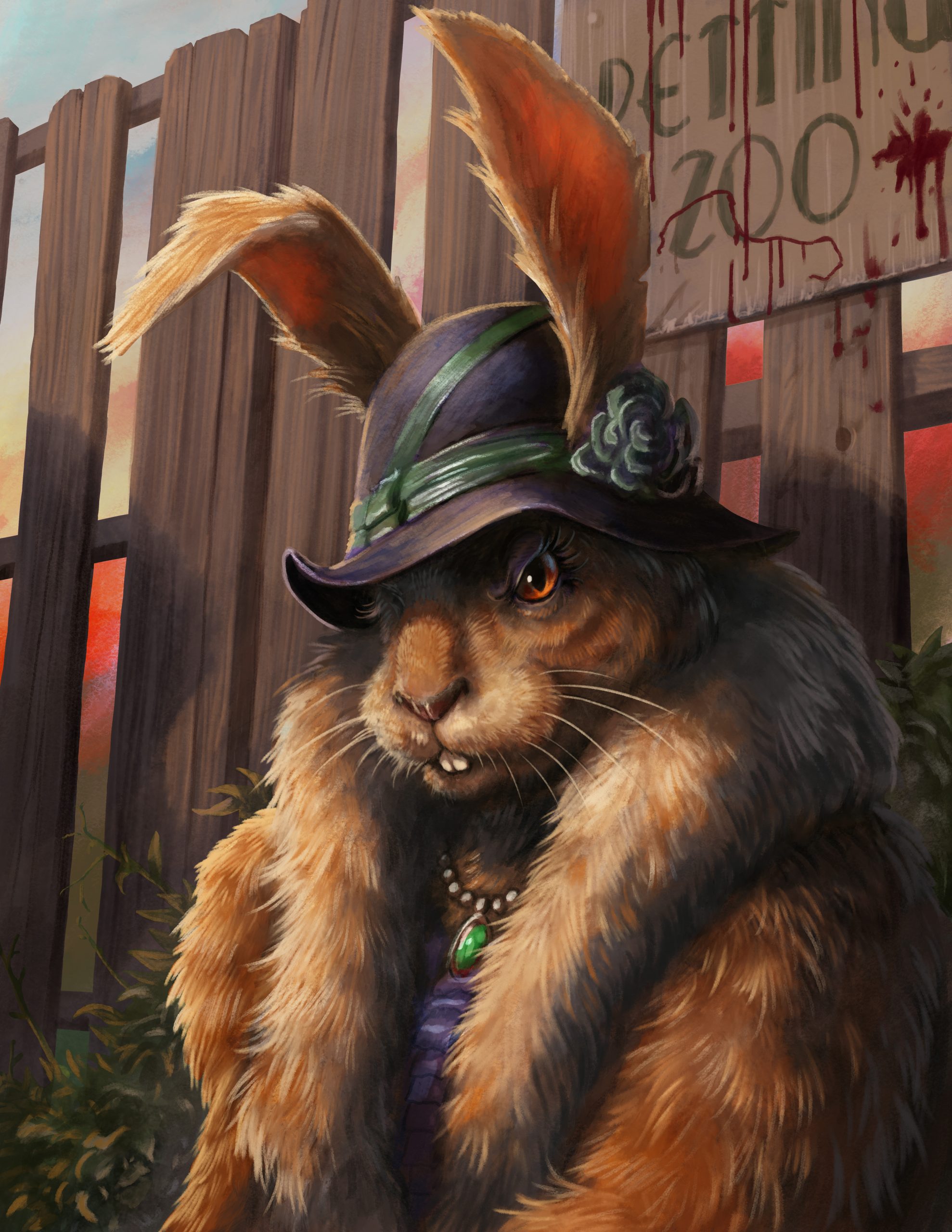
The Art Is Fantastic Too
Of course, we can’t talk about a Battlezoo book without talking about the artwork.
Elemental Storm contains more than 200 original illustrations, and Roll for Combat specifically notes that the book contains no AI-generated art.
And that’s important for a bestiary.
Monster art isn’t just decoration.
It’s inspiration.
Sometimes I don’t know what a monster should do until I see what it looks like.
Sometimes an illustration suggests an environment.
Sometimes it suggests an ability.
Sometimes it gives me an idea for an entirely different creature.
The art helps make flipping through the book an enjoyable experience even when you’re not actively preparing for a game.
My Favorite Part Might Not Be the Monsters
After reading through Elemental Storm, I think this is the biggest takeaway I’d give GMs:
Don’t buy this book just because you want more monsters.
Buy it because you want more ways to make monsters matter.
The creatures are great.
The spells are useful.
The elemental themes are fun.
But the Monster Hunter rules and Monster Parts system are the things that really caught my attention.
And those ten rules for fun combat?
Those might end up being the most useful pages in the entire book.
Final Thoughts
Battlezoo Bestiary: Elemental Storm is a book that offers considerably more than its title suggests.
Yes, you’re getting more than 160 new monsters covering 20 different elemental concepts.
Yes, you’re getting new spells.
Yes, you’re getting a ton of fantastic artwork.
But you’re also getting tools that can fundamentally change how your players interact with monsters.
The Monster Hunter rules can turn a huge creature from a pile of hit points into an actual encounter space.
The Monster Parts system can turn monster corpses into meaningful rewards and give players another reason to care about what they hunt.
And the 10 Rules for Fun Combat provide ideas that I think virtually every GM should spend some time considering—even those of us who have been running games for decades.
I’m going to be coming back to that section.
A lot.
I can already see myself incorporating those ideas into my regular encounter design and pulling them out whenever I want to make a combat encounter feel like something more than, “Roll initiative and start reducing hit points.”
And the Monster Parts system?
That one is going to be dangerous.
Because now I’m looking at every monster I create and thinking:
“Okay… but what can the players harvest from this thing?”
That’s a rabbit hole I’m very happy to fall down.
Thanks again to Roll for Combat for sending Nerdarchy Battlezoo Bestiary: Elemental Storm along with the other Battlezoo books we’ve been checking out. This one has definitely earned its place on the shelf, and I suspect it will be getting opened a lot more often than just when I’m looking for a new monster.
Because sometimes the best RPG books don’t just give you more stuff.
They give you new ways to play.
And Elemental Storm does exactly that.
Stay nerdy—and maybe don’t waste that monster corpse.
You never know what you can make from it.
Thanks for reading. Until Next Time, Stay Nerdy


No Comments